
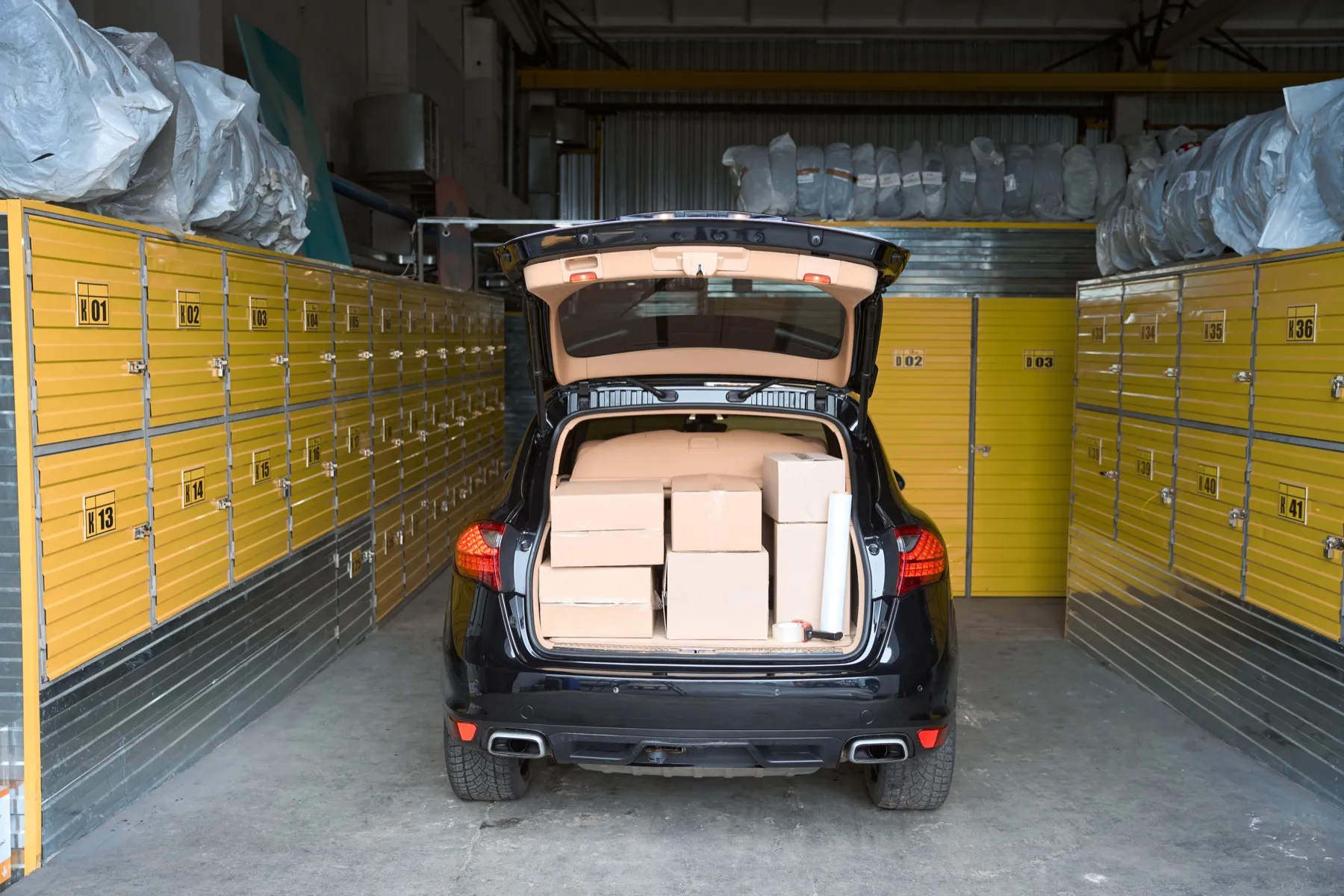
A car has a boot, a back seat and plenty of space, so it is natural to think of filling it when you ship it, especially if you are moving home. The worry is that a few boxes will get the car held at the port or land you with a tax bill. Whether you can do it depends on two things: how the car is travelling, and what customs makes of what is inside.
The short answer
On RoRo, the car should normally be empty. In a container, there is more flexibility, as long as what travels is agreed with us and declared. Either way, anything inside the car is goods coming into the UK, and customs treats it that way.
RoRo: empty means empty
On a RoRo ship, port staff drive the car on and off, and it sits in an open hold beside other cars. The car should normally be empty: no personal belongings and no loose parts.
That rule comes with the method. If you need to send things with the car, a container is the better choice. Our guide to container, RoRo or air compares the methods.
Container: more flexible, by arrangement
In a container, the car is strapped down behind sealed doors from loading until our own team unloads it at our site in Castle Donington. That makes it more flexible about what is inside the car.
Parts and spares can travel if they are declared. Check with us before you pack anything, rather than after the car has been collected, so we can confirm what is allowed and include it in the paperwork. Personal items should come out of the car unless we have agreed otherwise.
It is also worth knowing that some containers may be fumigated to keep foreign pests out. That is one more reason to agree with us what goes in the car before it is loaded.
| Feature | Container | RoRo |
|---|---|---|
| Belongings inside | By arrangement, declared | Normally not |
| Parts and spares | Yes, if declared | No loose parts |
| Who handles the car | Sealed until our team unloads it | Port staff drive it on and off |
| Tell us first | Yes, before collection | Yes, and we may suggest a container |
Customs sees everything inside the car
This is the part people miss. Import VAT and duty are worked out on the car, and anything else that comes in with it is goods being imported too. Leaving it unmentioned does not make it disappear; it just makes it a problem at clearance.
So whatever is going in the car needs to be on the paperwork. We clear cars as HMRC CDS authorised agents, and we can only declare what we know about. A box of spares that nobody mentioned is the kind of small thing that holds up a customs entry, and a held entry can mean port storage charges.
Moving home: Transfer of Residence covers belongings
If you are moving your home to the UK, HMRC's Transfer of Residence relief, ToR for short, can cover your personal belongings as well as the car. Approved goods come in without import VAT or duty.
GOV.UK sets out the main conditions:
- You have lived outside the UK for at least 12 months in a row
- You have had the goods in your possession for at least 6 months before you move
- You import them within 12 months of coming to live in the UK
- You do not lend, sell, hire out or use them as security for 12 months after the move
The goods can come in more than one consignment, so belongings do not have to travel with the car. Our Transfer of Residence guide covers the car side in full.
Applying with ToR1
You apply to HMRC online with form ToR1, and you need to do it before your goods are shipped. If it is approved, HMRC sends you a unique reference number, which goes on the import declaration.
The list of belongings does not need to be item by item. GOV.UK says you can group things, such as books or clothes, estimate numbers for things like kitchen items, and leave out original costs, current values and brands. Once approved, personal items can usually be declared under a single commodity code.
No reference, no relief. GOV.UK warns that without a valid ToR reference you may be billed for import duties and administration charges on your belongings. Apply before anything ships, and send us the reference.
What ToR does not cover
Some goods are left out of the relief altogether, even when you qualify:
- Alcohol
- Tobacco and tobacco products
- Commercial means of transport
- Non-portable instruments needed for a trade or profession
- Goods brought in from a second home or holiday home
The relief also does not remove the need for a licence for restricted goods, such as firearms or endangered species. If you do not qualify for ToR at all, tax and duty are due on the goods, and they must be paid before you can collect them.
Before you pack anything
Belongings checklist
0 of 7 done
The rest of the prep, including fuel and condition checks, is in our guide to preparing your car for shipping, and the documents are in the paperwork you need. If you are relocating, moving to the UK with your car puts it all in order.
Questions people ask
Can I leave personal belongings in my car when it is shipped?
Not normally on RoRo, where the car should be empty with no belongings or loose parts. A container is more flexible, but tell us first so it can be agreed and declared.
Can I send spare parts in the car?
In a container, parts and spares can travel if they are declared. Check with us before you pack them. On RoRo, the car should have no loose parts.
Do I pay tax on belongings shipped in the car?
Anything in the car is goods being imported. If you are moving home and HMRC approves Transfer of Residence relief, your personal belongings can come in without import VAT or duty. Otherwise tax and duty may be due.
Does Transfer of Residence cover household goods?
Yes, personal belongings as well as the car, if you meet the conditions and apply with form ToR1 before the goods are shipped. Alcohol, tobacco and goods from a second or holiday home are not covered.
Do my belongings have to arrive with the car?
No. GOV.UK allows ToR goods to come in more than one consignment, as long as they arrive within 12 months of you coming to live in the UK.
Moving home with a car and a few boxes? Tell us what you are sending on the quote form and we will recommend the right way to ship it.
