
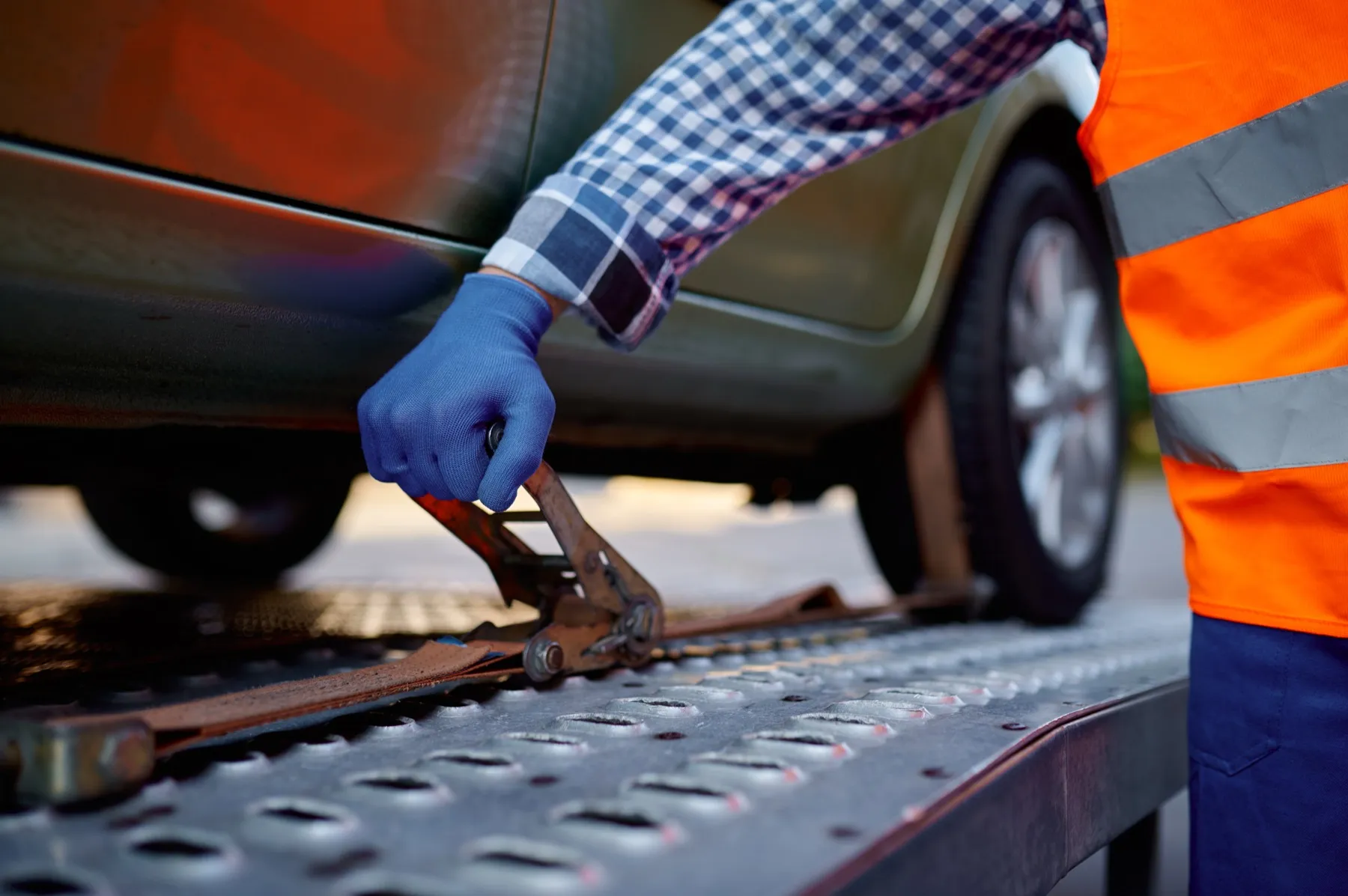
Handing your car over and watching it disappear into a steel box is the moment a lot of people find hardest. You picture it sliding about for weeks at sea. The reality is far less dramatic: the car is held in place from the moment it is loaded until our own team takes it out in Derbyshire, and very few hands touch it in between.
From your driveway to the warehouse
Before anything goes in a container, the car has to reach the loading warehouse at the port. Our partners abroad collect it from your address or your dealer and take it there. Open transport is standard; for a valuable car, ask for enclosed.
This is also the point to photograph the car all the way round, with close-ups of any existing marks. Those photos are the starting point everyone works from, and our guide to preparing your car for shipping covers the rest of the prep.
Into the container
At the warehouse, our agents organise the export paperwork and the loading. A car that runs is driven into the container. A car that does not run can still go, but it needs special loading equipment, and there is usually some extra cost for that.
In a shared container, the cars are loaded on a wooden frame. The frame is what allows more than one vehicle to fit in the same box, which is how a shared container keeps the cost down. In a dedicated 20ft container, your car is the only one inside. Our guide to shared and sole containers explains the choice.
Strapped down so it cannot move
Once the car is in position, it is strapped down. The aim is simple: the car must not be able to move, whatever the sea is doing. The straps hold it in place for the whole voyage, and they stay on until our team takes them off at the other end.
Bikes are a little different. For container shipping we recommend crating a motorbike, because straps hold a bike at the wheels rather than compressing the suspension, and a crate stops it moving in transit. Our guide to importing a motorbike has more on that.
Doors shut, and they stay shut
When the loading is done, the container doors are sealed. They are not opened again until the container is unloaded in the UK. Nobody drives the car on or off a ship, and it is out of the weather the whole way.
Some containers may be fumigated to keep foreign pests out. If you are thinking of leaving anything inside the car, tell us first; our guide to belongings in a shipped car explains the rules.
Sealed means sealed. The container is not opened at the port of arrival for us to unload. It is moved from the ship to the quayside, then hauled to our own facility, and the first people to open the doors are our team.
From the UK port to our yard
When the ship docks, the container is lifted from the ship to the quayside. We handle the port side and pay the port charges that come with it, and we clear the car through customs as HMRC CDS authorised agents.
Our site in Castle Donington is well placed for container haulage by road and by rail, so the container comes to us still sealed. That gives us direct control of it from the port and cuts out the waiting that happens at busy port warehouses. It also keeps the time at the port short, which matters for reasons covered in our guide to port storage and demurrage charges.
Unloading, by our own team
We unload every container at our private facility using our own specialist team of container unloaders. We are fully equipped to get a car out of a container safely.
The difference that makes is time. A port warehouse emptying boxes against the clock has a reason to hurry. We are not paid by the hour to empty containers quickly, so we take as long as each car needs. A delivery inspection report is then taken, and that is what gets compared with your photos from before collection.
From there, the car does not leave the site. It goes straight into its UK changes, testing and registration. Our guide to when your car arrives in the UK covers that part.
The whole journey, in order
-
Before collection
Photos and prep
You photograph the car all round and send us the paperwork. Fuel stays low.
-
Collection
To the loading warehouse
Our partners collect the car and take it to the port warehouse on an open or enclosed transporter.
-
Loading
Into the container
The car is driven in, or loaded with special equipment if it does not run. Shared containers use a wooden frame.
-
Securing
Strapped and sealed
The car is strapped down so it cannot move, and the doors are sealed until the UK.
-
Arrival
Port to Castle Donington
We clear customs, move the container from the quayside and haul it to our facility.
-
Unloading
Out of the box
Our own team unloads the car and a delivery inspection report is taken.
How this compares with RoRo
On a RoRo ship, the car is driven up a ramp onto a vehicle deck and held with lashings and chocks. It is a good, well-proven method, used to move new cars around the world. The difference is in the handling around it.
| Feature | Container | RoRo |
|---|---|---|
| How it is held | Strapped down inside the container | Lashings and chocks on a vehicle deck |
| Who drives it | Nobody at sea, it stays in the box | Port staff drive it on and off |
| Exposure | Sealed away from weather and handling | Open hold, more exposed to knocks |
| Where it comes off | Our site, by our own team | At the UK port |
| Car must run | No | Yes |
The full comparison, including air freight, is in container, RoRo or air.
Questions people ask
How is a car secured inside a shipping container?
It is strapped down so it cannot move in transit. In a shared container, the cars sit on a wooden frame so more than one fits safely in the same box.
Is the container opened at the UK port?
Not for unloading. The doors are sealed at origin and stay shut until the container reaches our facility in Castle Donington, where our own team opens it.
Can a car that does not run go in a container?
Yes. It needs special loading equipment and there is usually some extra cost, but a container is the right choice for a non-runner.
Who unloads my car in the UK?
Our own specialist team of container unloaders, at our private facility. We are not paid by the hour, so we take as long as each car needs.
What happens after the car is unloaded?
A delivery inspection report is taken and compared with your photos from before collection. The car then stays on our site for its UK changes, testing and registration if you want them.
Want your car shipped this way? Tell us about it on the quote form and we will price the collection, the container and the unloading in one go.
